Pricing your Rockville Centre home can feel like a moving target. You want a number that attracts strong interest, reflects your home’s true value, and helps you hit your timeline. The good news is you can get there with a simple, data-backed process and a few local insights.
In this guide, you’ll learn how to read today’s market, build a realistic price range with a CMA, and use Rockville Centre factors like commute access, schools, taxes, and flood risk to fine-tune your list price. You will also see common seller mistakes to avoid and a checklist you can use today. Let’s dive in.
Start with the market snapshot
Before you pick a price, look at how the local market is behaving. As of a recent January 2026 snapshot from a major real estate portal, Rockville Centre shows homes selling in roughly 30 to 31 days on average with sale-to-list prices around 101 percent. Another portal’s typical home value reads near the mid to high $900,000s, while a third shows a median listing price in the low $800,000s and a median price per square foot in the high $400s. These figures differ because each source uses its own methods and time windows.
At the county level, OneKey MLS reporting covered by Newsday shows Nassau County’s single-family median sale price in the $800,000 to $860,000 range in late 2025. Tight inventory across Long Island has been a key driver. You can review that context in the Newsday coverage of Long Island prices based on OneKey MLS data. See the Nassau County trend context.
Use any portal snapshot as a guidepost, not a promise. The MLS is the definitive record of closed sales, and a local CMA is the tool that turns market data into a smart list price.
Understand how list prices are set
The core tool for pricing is a Comparative Market Analysis. A CMA compares recent closed sales, active and pending listings, and even expired listings to estimate a defensible price range for your home. A strong CMA will use several close-by comps and adjust for features like square footage, beds and baths, lot size, condition, updates, and extras such as a finished basement or garage. Learn more about how a professional CMA works in this CMA overview for sellers.
Choose the right comparable sales
For most Rockville Centre homes, you want comps in the same neighborhood or within roughly a quarter to one mile, depending on block-level differences. Focus on closed sales from the last three to six months. If sales are scarce, you can reach back farther and adjust for any change in market direction. A practical how-to on comp selection is outlined in this step-by-step CMA methodology.
Account for size and features
Price per square foot gives you a fast baseline, but it is not a final answer. Two homes with the same square footage can sell very differently based on layout, updates, and lot. In Rockville Centre, buyers also put value on proximity to downtown and the train, finished lower levels with usable space, and move-in-ready kitchens and baths. A good CMA will show dollar or percentage adjustments for these differences and explain the reasoning.
Read live market signals
Pay attention to signals that show what buyers are doing right now. These include recent sale-to-list ratios, days on market versus the village average, price reductions on similar listings, and the list prices of pending homes. Your agent can pull these from the MLS to confirm whether buyer demand is heating up or cooling.
Rockville Centre value drivers to know
Commute access and the LIRR
The Babylon branch of the LIRR serves Rockville Centre with typical direct trips to Penn Station often in the 30 to 40 minute range, depending on the train. Homes within easy reach of the station often see stronger demand. You can check schedule references and station info here: Rockville Centre LIRR overview. Train times vary by day and time, so verify your own commute.
Schools and buyer demand
School district quality is a major factor for many buyers. Public ratings sites report strong marks for Rockville Centre Union Free School District, which can influence what similarly sized homes sell for across different blocks. View an independent snapshot in the Niche district profile. Always use neutral comparisons and verify specific school assignments directly with the district.
Neighborhood amenities and micro-markets
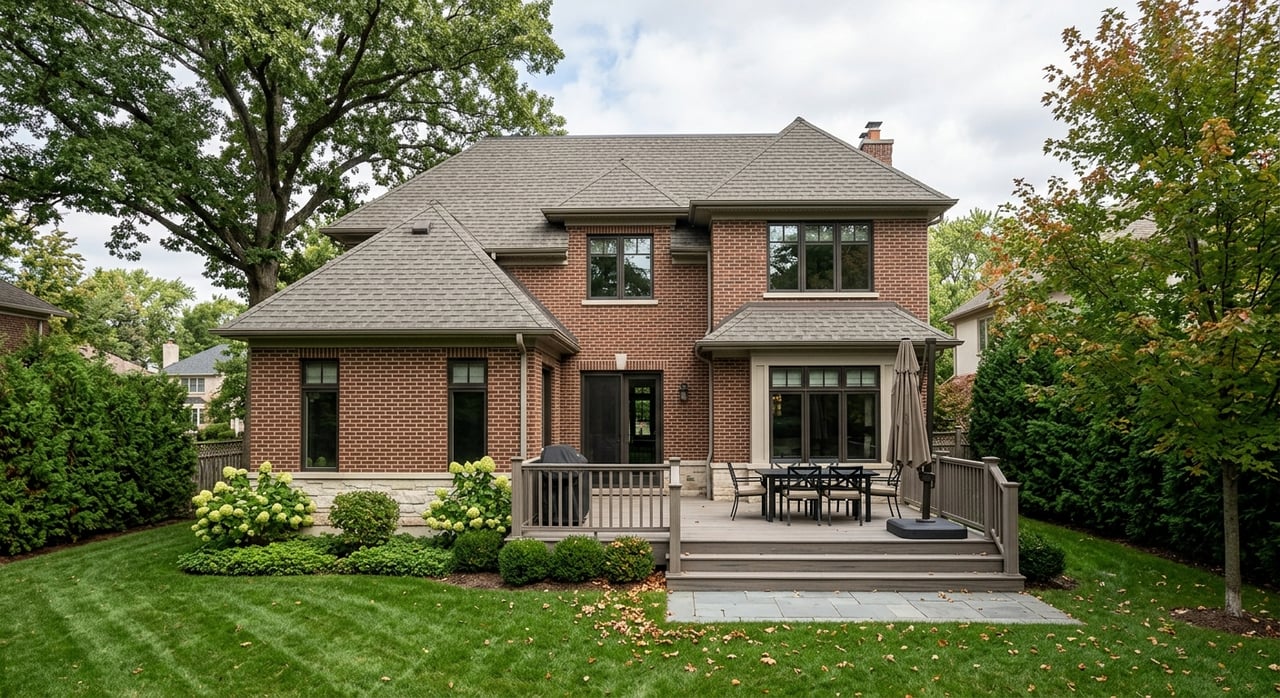
Rockville Centre offers a lively suburban downtown, parks, and a mix of Colonials, Capes, bungalows, and some condos and co-ops. These features create micro-markets. Blocks near the village center or train often carry a premium, while homes farther out may trade differently even at the same size. Your CMA should stay as close to your block and style as possible.
Property taxes and carrying costs
Nassau County is known for higher property tax burdens compared with much of the country. Buyers weigh that annual cost when deciding what they can afford, which can cap prices in some tiers. For context on regional property tax burdens, see the Tax Foundation’s state and county analysis.
Flood zones and insurance
Parts of Long Island’s South Shore fall within FEMA flood zones. A property’s flood designation and insurance history can affect both demand and price because buyers consider insurance premiums and potential mitigation costs. To check parcel-level flood information, start with the Long Island Sound Resilience resources hub and the FEMA Flood Map Service Center it links to.
Choose a pricing strategy
There is no single “right” price. Choose the strategy that fits your timing and goals.
- Price at market: Listing near the midpoint of your CMA range usually attracts the most qualified buyers with the least risk of stalling. A neutral, data-backed target is often the most efficient path to a timely sale. Review how agents approach this in the CMA overview.
- Price slightly below market: This can spark more showings and may encourage multiple offers if demand is strong. It works best when your home is well prepared and the segment is active. Understand the tradeoff, as explained in this pricing strategy guide.
- Price above market: Listing high and planning to negotiate can backfire. Overpriced homes often sit through the crucial first two to four weeks, gather price cuts, and may net less in the end. See more on why early momentum matters in the same strategy guide.
Pre-listing prep that supports price
You do not need a full renovation to sell well. Focus on high-impact, modest-cost improvements.
- Tidy and refresh: Declutter, deep clean, and paint main areas in neutral colors. Address small repairs like drips, loose railings, or scuffed walls.
- Boost curb appeal: Fresh mulch, trimmed shrubs, edged lawn, and a clean front door set a strong first impression. National reports show exterior refreshes and minor projects often recoup a high share of costs at resale. Browse examples in the Cost vs. Value report.
- Stage and photograph: Professional photography, floor plans, and light staging can shorten time on market and reduce buyer objections. Virtual staging is an option if the home is vacant. Guidance on why presentation matters appears in this seller timing resource.
- Get records in order: Gather permits and certificates for completed work. Consider a pre-listing inspection to surface items you can fix or disclose up front. This reduces surprises during buyer inspections and helps appraisers verify permitted improvements.
DIY valuation checklist for Rockville Centre
Use this simple process to estimate a price range before you meet with an agent.
Pull recent sales in 11570. Choose 3 to 6 closed comps in your neighborhood from the past 3 to 6 months. Note sale price, square footage, beds, baths, lot size, and days on market. A good overview of how agents structure this appears in this CMA guide.
Calculate price per square foot. Compute $ per square foot for each comp and take a simple average. A step-by-step method is outlined in this CMA methodology.
Adjust for big differences. Add value for extra beds and baths, finished basements, recent quality renovations, larger private lots, or convenient proximity to the train and schools. Subtract for deferred maintenance or unpermitted work. Roof, HVAC, kitchen, baths, finished basement, and garage are common items that swing value by more than $10,000.
Check active and pending competition. Compare your adjusted baseline to similar active and pending listings. This shows where you would sit in the market funnel and helps you decide whether to position as a value, the middle of the pack, or a premium choice.
Consider a pre-listing appraisal. If your expectation is more than 10 percent above or below the CMA midpoint, a licensed appraiser’s report can be a helpful tie-breaker and prepares you for the lender appraisal during escrow. See the CMA overview for when professionals use this step.
A quick Rockville Centre example
- Subject home: 1,600 square feet, 3 beds, 2 baths, finished basement, 1-car garage, refreshed kitchen, mid-block location.
- Three recent comps within 0.5 mile: 1) 1,550 sq ft updated Colonial at $775,000. 2) 1,620 sq ft home with average updates at $780,000. 3) 1,650 sq ft updated home on a slightly larger lot at $840,000.
- Price per square foot for comps: $500, $481, and $509. Simple average near $497.
- Baseline estimate: 1,600 sq ft x $497 equals about $795,000.
- Adjustments: +$20,000 for refreshed kitchen and finished basement quality relative to comp 2, +$10,000 for strong mid-block location near village amenities, minus $5,000 for an older roof with 5 to 7 years left. Adjusted midpoint near $820,000.
Based on current actives and pendings in that band, you might list near the midpoint if days on market are shortening in your segment, or start slightly under to build traffic if inventory is thin but buyers are price sensitive.
Know your closing costs in New York
Your net proceeds depend on more than the sale price. Typical seller costs include the agreed commission, any seller concessions, pro-rated property taxes, and any title-related fixes. New York also requires transfer tax paperwork. The state transfer tax is computed at $2 per $500 of consideration, and an additional 1 percent “mansion” tax applies to residential conveyances of $1,000,000 or more. Always consult your attorney or title company to confirm who pays each fee and to prepare the TP-584 form. You can learn more in the TP-584 transfer tax instructions.
What to expect from a local agent
A strong Rockville Centre listing agent will deliver a written CMA with 3 to 6 close comps, a suggested list-price range, and a recommended pricing strategy. You should also receive a seller net sheet, a pre-listing prep plan, a marketing plan covering MLS exposure and portal distribution, and examples of recent local sales. For a refresher on what a professional CMA includes, review this seller-focused CMA explainer.
Avoid these common pricing mistakes
- Overpricing against nearby comps and current demand. This often leads to a stale listing and a lower final net. See why early momentum matters in this seller timing resource.
- Skipping small, high-ROI fixes like paint, cleaning, and curb appeal that raise buyer perception. The Cost vs. Value report shows minor projects often offer better cost recovery than big remodels.
- Not organizing permits and records for renovations, which can create appraisal or legal delays.
- Ignoring micro-markets. Rockville Centre buyers value convenience, schools, and condition. Use a local CMA to stay block-specific.
Next steps
Pricing is part math and part market sense. With a current CMA, clear strategy, and thoughtful prep, you can bring your Rockville Centre home to market with confidence and get the results you want. When you are ready for a personalized price range and a seller net sheet tailored to your timeline, connect with Theresa Brown to get started. Get an Instant Home Valuation and a local plan that fits your goals.
FAQs
How long does it take to sell a home in Rockville Centre?
- Recent portal snapshots for January 2026 show average days on market near 30 to 31 days, but your home’s condition, price point, and location can shift that timeline.
How do Nassau County property taxes affect my list price?
- Higher annual taxes impact buyer affordability, which can cap prices in some tiers. Context on regional tax burdens is available from the Tax Foundation’s analysis.
Do homes closer to the Rockville Centre LIRR station sell for more?
- Proximity and walkability to the station often raise demand because typical direct trips to Penn Station can be about 30 to 40 minutes. Check schedule details in the LIRR station overview.
Should I price under market to spark a bidding war in Rockville Centre?
- Pricing slightly below market can work in segments with strong demand and low inventory, but it carries risk if competition is soft. Review active and pending comps before choosing that strategy.
Do I need a pre-listing appraisal if my CMA shows a wide range?
- If your expectations are more than about 10 percent from the CMA midpoint, a licensed appraisal can clarify value and prepare you for the lender appraisal during escrow. A CMA primer outlines when professionals use this step.